Why Some Construction Projects Go Smoothly While Others Don’t
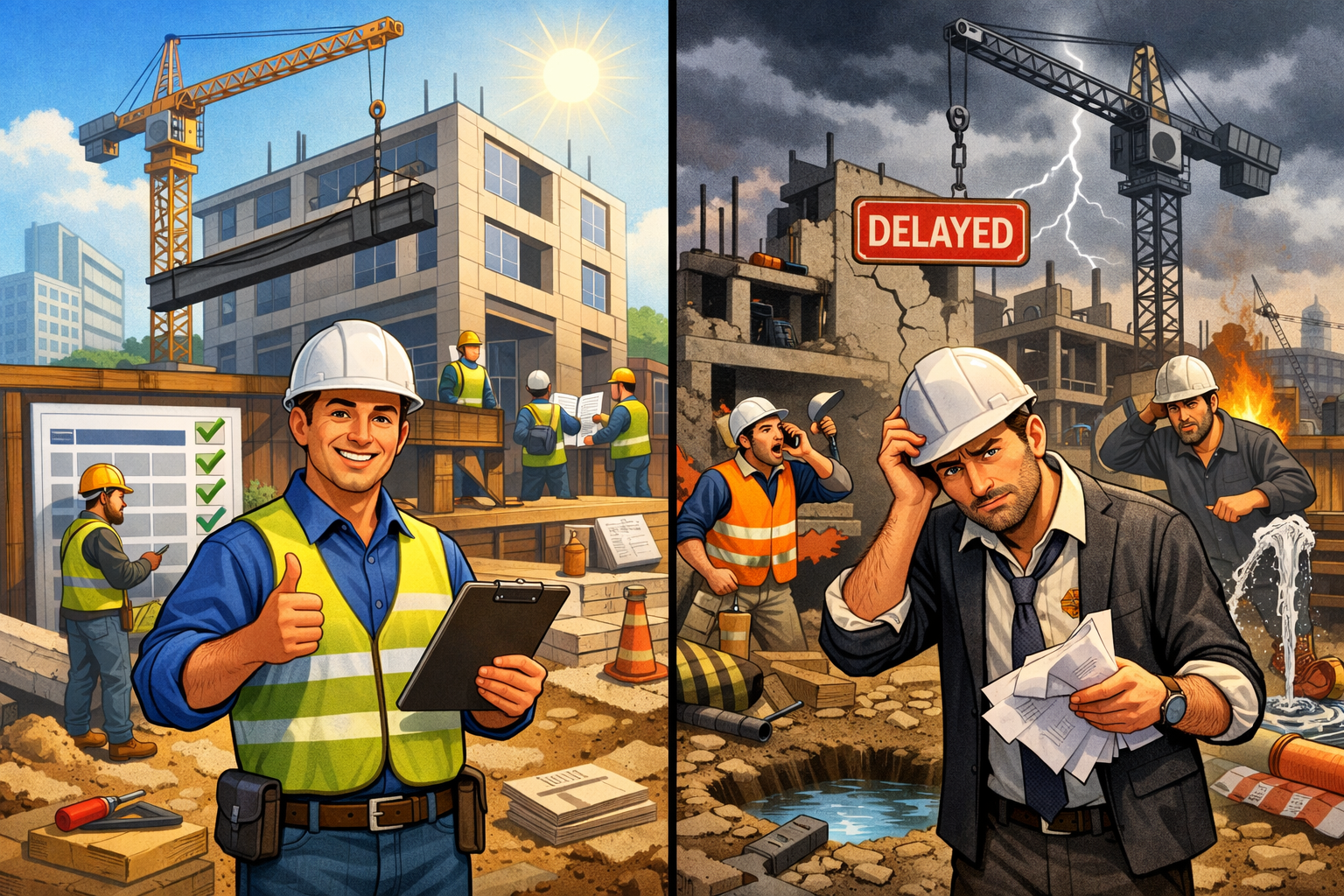
You can stand on two construction sites that look almost identical on paper, and still feel a completely different atmosphere. One moves steadily, without tension. The other feels like it’s constantly catching up with itself. That difference is exactly what sits behind why some construction projects go smoothly while others don’t, even when budgets and plans seem comparable.
It Rarely Breaks in One Place
What people expect is a single clear reason — a mistake, a delay, a bad decision. In reality, things don’t fall apart like that.
More often, it’s subtle. A few small misalignments appear early and quietly stay in the background. They don’t stop the process, but they change its rhythm. Communication becomes slightly less precise. Timing starts to stretch in places where it shouldn’t.
You can recognize this pattern pretty quickly:
- instructions get repeated, but not quite the same way
- details are clarified more than once
- decisions feel “almost final,” but not fully locked
None of these are dramatic. But together, they create friction that keeps building.
The Projects That Move Well Feel… Predictable
Not boring — predictable in a good way.
There’s a kind of calm logic to projects that go smoothly. You don’t see constant urgency. You don’t feel like everything depends on the next hour. Instead, things unfold at a pace that feels planned, even when adjustments happen.
What’s interesting is that this stability doesn’t come from perfection. It usually comes from a few underlying conditions being right from the start:
- expectations are clearly shared, not assumed
- decisions are made with enough context, not rushed
- responsibilities don’t overlap in confusing ways
When those are in place, even problems don’t escalate. They get absorbed.
And that’s a big part of why some construction projects go smoothly while others don’t — not the absence of issues, but how easily they are handled when they appear.
When Reality Starts to Drift Away from the Plan
There’s always a moment — sometimes small, sometimes obvious — when the original plan and the actual process begin to separate.
It might look like a minor adjustment. A change in sequence. A workaround that saves time in the moment. Nothing alarming.
But if there isn’t a strong internal structure holding the project together, those adjustments don’t stay isolated. They spread. Slowly, then faster.
And suddenly, the project isn’t following a plan anymore. It’s reacting.
This shift is easy to miss because it doesn’t happen all at once. It feels like adaptation. Only later does it become clear that the direction itself has changed.
Pressure Changes How Decisions Are Made
There’s a noticeable difference between a project that feels controlled and one that feels pressured.
Under pressure, decisions become shorter. Less discussion, more urgency. Fewer questions, more assumptions. It’s not always visible from the outside, but you can feel it in how people talk, how quickly things are approved, how often something gets “just done.”
That’s usually the point where quality doesn’t drop instantly — but consistency does.
And once consistency is gone, it’s hard to rebuild during the process itself.
Closing Thought
Looking at it from the outside, it’s tempting to think smooth construction comes down to better planning or more experience. Those things matter, but they don’t explain everything.
The deeper reason behind why some construction projects go smoothly while others don’t sits in how early clarity, communication, and small decisions shape the entire flow. Not dramatically, not loudly — just steadily, in ways that only become obvious when you compare one project to another.