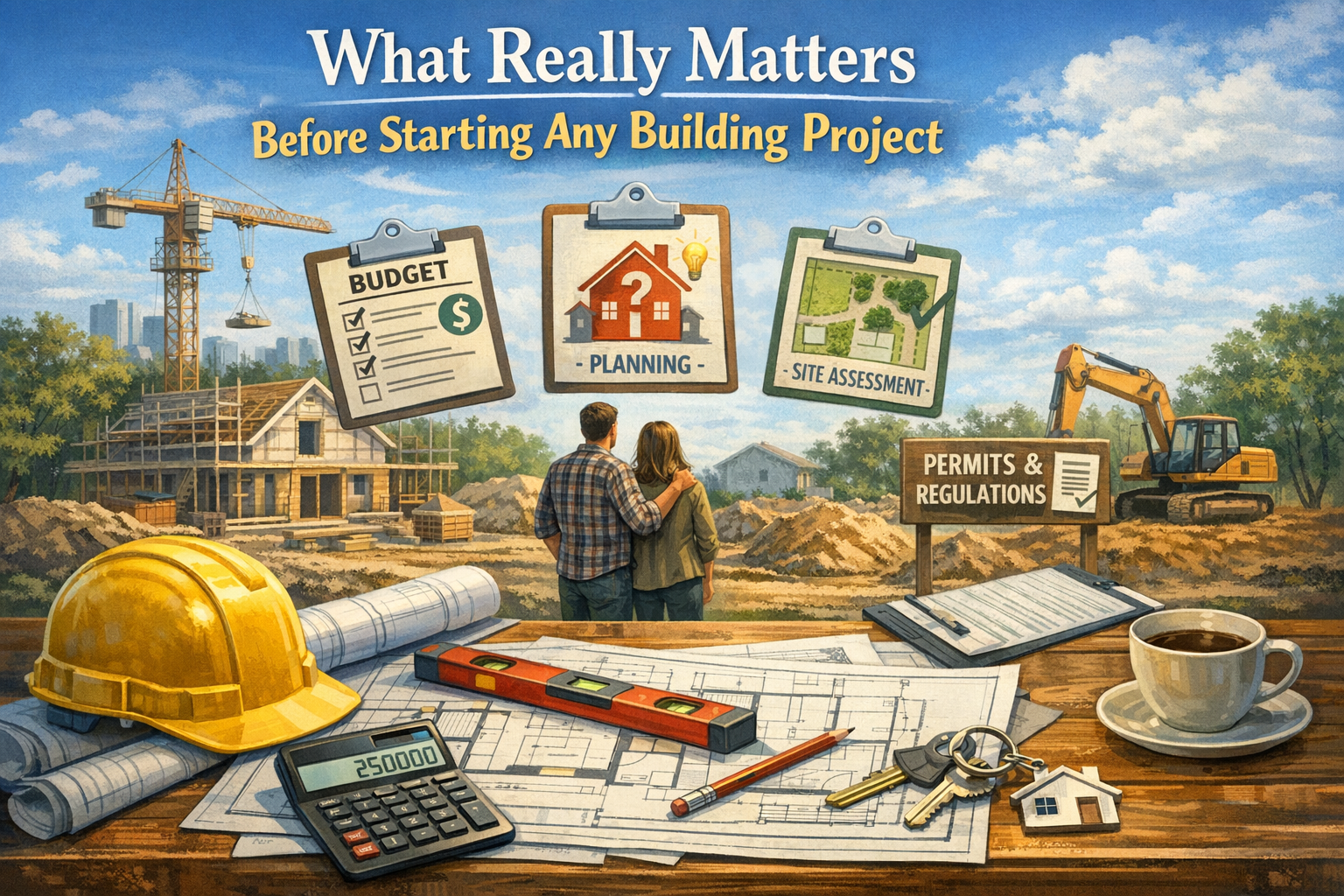
What Really Matters Before Starting Any Building Project
Most people think construction begins when something physical happens — ground broken, materials delivered, walls going up. In reality, the tone of the entire project is already set much earlier. That’s where what really matters before starting any building project quietly decides whether everything ahead will feel controlled… or constantly slipping.
The Idea Sounds Clear — Until You Try to Define It
At first, everything feels simple. A house, a building, a space with a purpose. It exists clearly in your head.
But the moment you try to explain it — not just generally, but in specifics — things start to blur. Dimensions shift. Priorities compete. What seemed obvious becomes negotiable.
This is usually the first hidden turning point.
Because an idea that isn’t fully shaped doesn’t stay flexible — it becomes unstable. And instability at this stage doesn’t disappear later. It spreads into every decision that follows.
Sometimes the issue shows up like this:
- rooms that feel slightly off in proportion
- functions that don’t fully match how the space is used
- compromises that weren’t intended, just accepted
None of these come from bad construction. They come from unclear beginnings.
Decisions Made Early Don’t Stay Small
There’s a tendency to treat early choices as temporary. Something that can be adjusted later.
That assumption rarely holds.
A small change at the planning stage often forces a chain reaction. One adjustment shifts another, then another. What looked like a minor tweak starts influencing structure, cost, timing — sometimes all at once.
And the tricky part is, these early decisions don’t feel important when they’re made. They feel… reversible.
They aren’t.
This is exactly where what really matters before starting any building project begins to take shape — not in big strategic moves, but in quiet, early commitments that lock things into place.
The Space Between Planning and Reality
There’s always a gap between what is planned and what is built. That gap is normal.
What matters is how wide it becomes.
Some projects carry their original logic all the way through. Others slowly drift. Not because of one mistake, but because adjustments happen without a clear reference point.
And once that reference fades, decisions become reactive instead of intentional.
You can often trace this drift back to a few overlooked moments:
- assumptions that were never verified
- details that were left “to figure out later”
- expectations that weren’t aligned between people involved
Individually, these seem harmless. Together, they reshape the project.
It’s Not About Control — It’s About Clarity
Trying to control every aspect before starting is unrealistic. Things will change. They always do.
But clarity works differently than control.
Clarity doesn’t freeze decisions. It gives them direction. It allows changes without losing the original intent.
When that clarity is missing, even well-executed work can feel disconnected. Pieces fit, but the whole doesn’t fully come together.
That’s why the early phase matters more than it seems. Not because it determines everything — but because it defines how everything will be interpreted later.
Closing Thought
Looking back, most construction issues don’t start where they become visible. They start much earlier, in decisions that felt too small to matter at the time.
And that’s the quiet reality of what really matters before starting any building project — it’s rarely about the scale of the decision. It’s about how clearly it was understood when it was made.