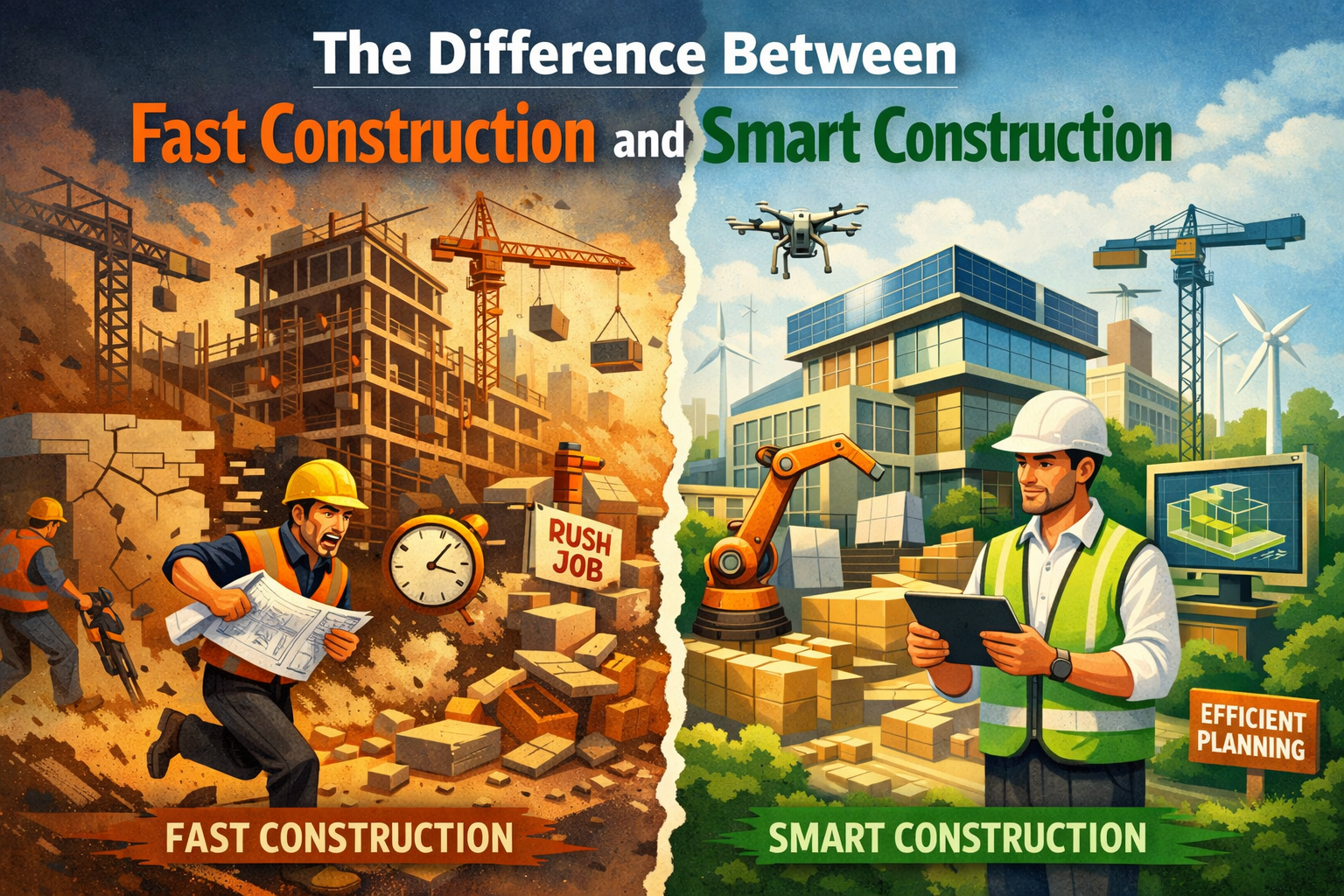
The Difference Between Fast Construction and Smart Construction
Most people assume speed is always a good sign. Deadlines met, walls going up quickly, everything moving without pauses — it feels efficient. But the moment you look closer, the line between fast construction and smart construction becomes less obvious and a lot more important.
Where Speed Starts to Cost More
At first, everything looks impressive. Crews move quickly, materials arrive on time, and the structure seems to grow almost daily. It gives the illusion of control.
Then small things begin to show up.
Corners that don’t align perfectly. Decisions made on the spot instead of earlier. Someone fixing something that was just done the day before. None of these are dramatic on their own, but together they tell a story.
What usually drives fast construction isn’t efficiency — it’s pressure. Deadlines, budgets, expectations. And under pressure, the process shifts:
- planning gets shortened
- checks become quicker than they should be
- details are postponed “for later”
Later rarely comes without consequences.
Smart Work Looks Slower From the Outside
There’s a different kind of site that doesn’t look as impressive at first glance. Less noise, fewer rushed movements, more pauses.
It can feel like nothing is happening.
But if you watch carefully, you notice something else. People stop before acting. Measurements are repeated. Materials are handled with more attention than speed would normally allow.
That’s where the difference begins.
Smart construction is not about avoiding mistakes entirely — that’s unrealistic. It’s about reducing the number of decisions that need to be corrected later. And that often means slowing down at the exact moment when rushing would feel easier.
The Moment Problems Become Visible
The real contrast between approaches doesn’t show during construction. It shows after.
Someone moves in. Time passes. And suddenly, things either settle… or start shifting.
You don’t need technical knowledge to notice it. It’s in how the space behaves:
- doors that close without resistance
- surfaces that stay aligned
- systems that work quietly in the background
Or the opposite.
A small crack that wasn’t there before. A sound that repeats every night. A detail that keeps drawing attention for the wrong reason. These aren’t failures of materials. They’re usually the result of earlier choices.
Why Slowing Down Isn’t About Time
It might seem like the difference between fast construction and smart construction is simply about speed. In reality, it’s about timing.
Knowing when to move quickly — and when not to.
There are moments in any project where speed makes sense. Repetition, routine tasks, clear steps. But there are also points where a pause saves far more time than it costs.
Those moments are easy to miss because they don’t look important in the moment.
They look like hesitation. Like overthinking. Like unnecessary caution.
But they’re not.
Closing Thought
No one complains when a building goes up quickly. It’s satisfying to watch, easy to understand, simple to measure.
What’s harder to notice is what didn’t happen — the problems avoided, the corrections never needed, the details that quietly stayed in place.
And that’s usually where fast construction and smart construction finally separate. Not during the build, but long after everything seems finished.