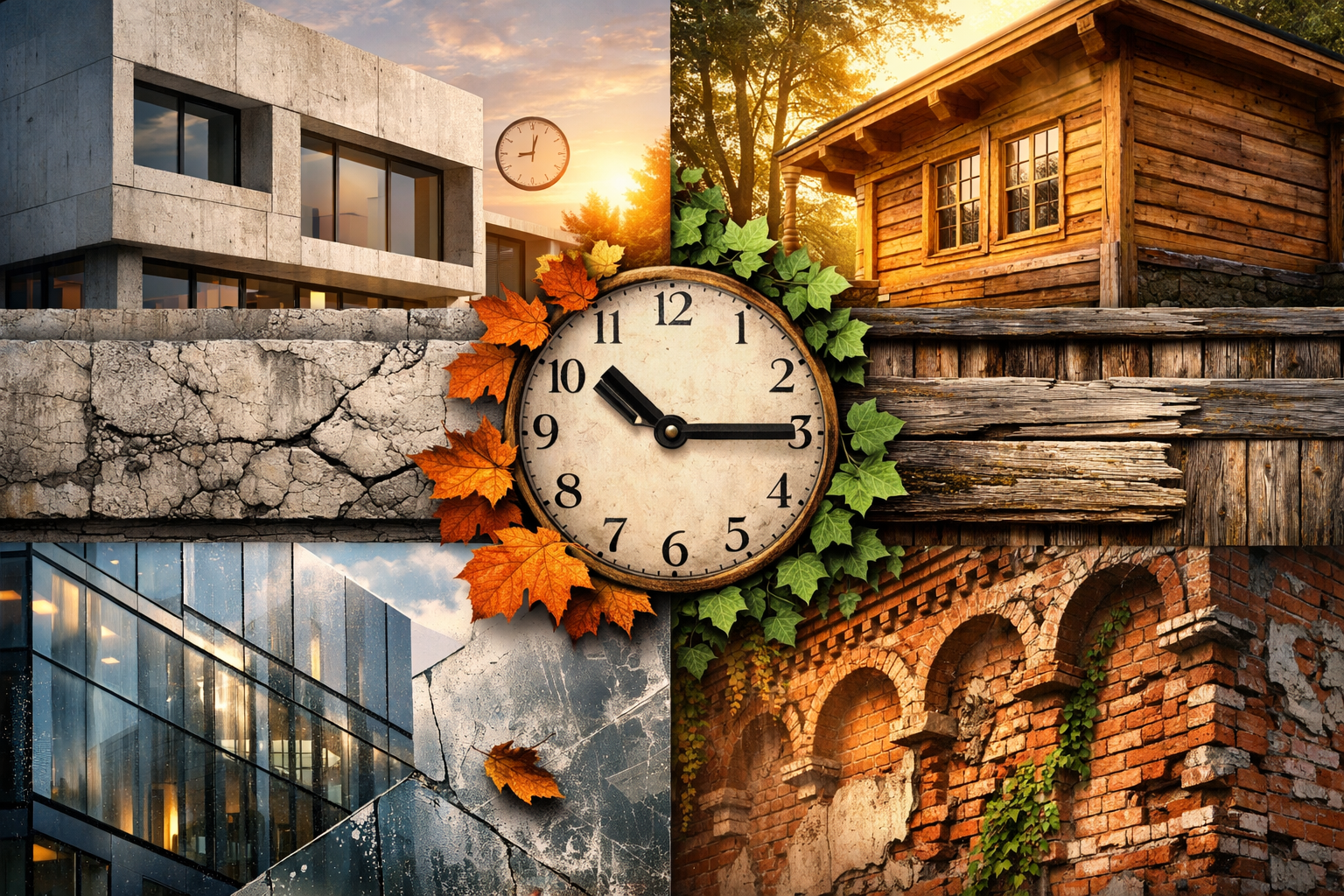
How Materials Change the Way a Building Feels Over Time
You don’t always notice it right away. A building can look almost the same after years, yet something about it feels different — quieter, heavier, sometimes even more comfortable. That shift is exactly where how materials change the way a building feels over time starts to reveal itself.
The First Impression Doesn’t Last
At the beginning, everything feels sharp. Surfaces are clean, edges are precise, textures are almost too perfect. There’s a certain freshness that comes not just from being new, but from everything behaving exactly as expected.
But that phase doesn’t stay.
Materials begin to react — not dramatically, just slowly. Wood softens its tone. Concrete loses its raw edge. Metal stops reflecting light the same way it did before. None of this happens overnight, yet over time the building stops feeling “new” and starts feeling settled.
And that transition isn’t a flaw. It’s part of the process.
Some Materials Age, Others Just Wear Out
There’s a noticeable difference between materials that evolve and those that simply degrade. You don’t need technical knowledge to feel it — it’s almost instinctive.
Certain surfaces gain depth. Others lose clarity.
It often comes down to how they respond to use and environment:
- natural materials tend to absorb change and soften visually
- synthetic ones often resist change, then suddenly show damage
- layered materials reveal their structure over time instead of hiding it
That’s why two buildings can age in completely different ways, even if they started with similar designs.
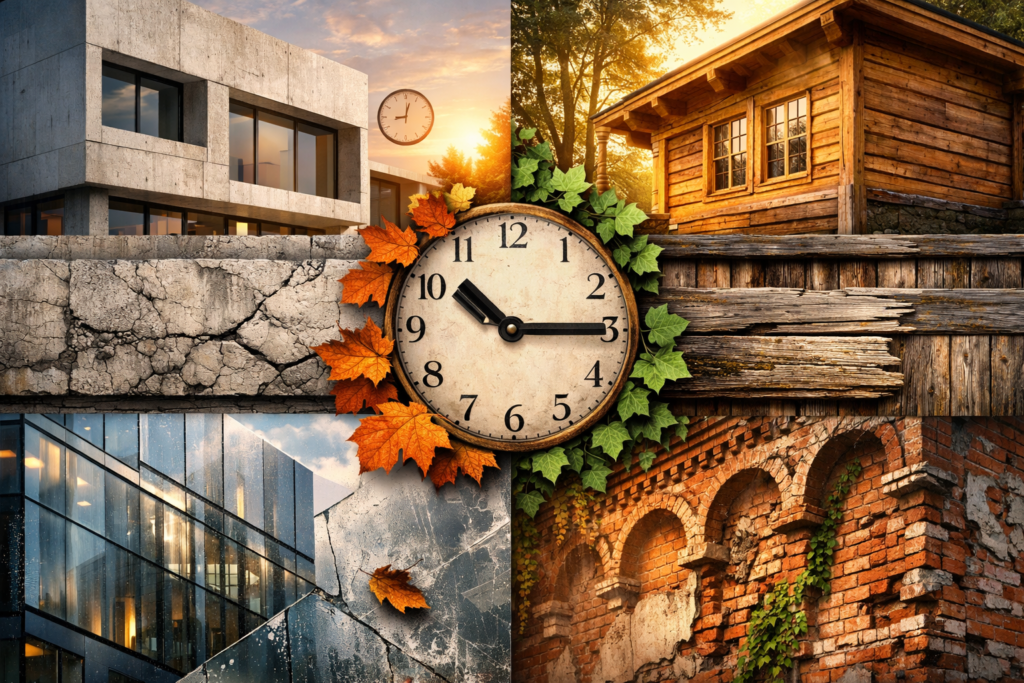
Living With a Space Changes How It Feels
There’s a point where the building stops being something you observe and becomes something you move through without thinking. That’s when materials start playing a different role.
You begin to notice things indirectly.
The way sound travels. How surfaces feel under your hand. The way light behaves at different times of day. None of this is about appearance anymore — it’s about experience.
And here’s the interesting part: materials don’t just change physically, they change how you interact with the space. A surface that once felt cold might start to feel familiar. A texture you didn’t notice at first becomes something you recognize without looking.
Small Changes That Add Up Quietly
Nothing dramatic needs to happen for a building to feel different after years. It’s usually a collection of minor shifts that accumulate.
A slight variation in color. A softened edge. A surface that reflects light differently depending on the hour. Each change is almost unnoticeable on its own.
Together, though, they reshape the atmosphere.
This is where how materials change the way a building feels over time becomes less about construction and more about presence. The building stops presenting itself and starts blending into daily life.
Closing Thought
You rarely think about materials once a place becomes familiar. They stop being something you evaluate and start becoming part of the background.
And maybe that’s the real transformation.
Because in the end, how materials change the way a building feels over time isn’t just about aging — it’s about how a space slowly shifts from something new into something that feels like it has always been there.